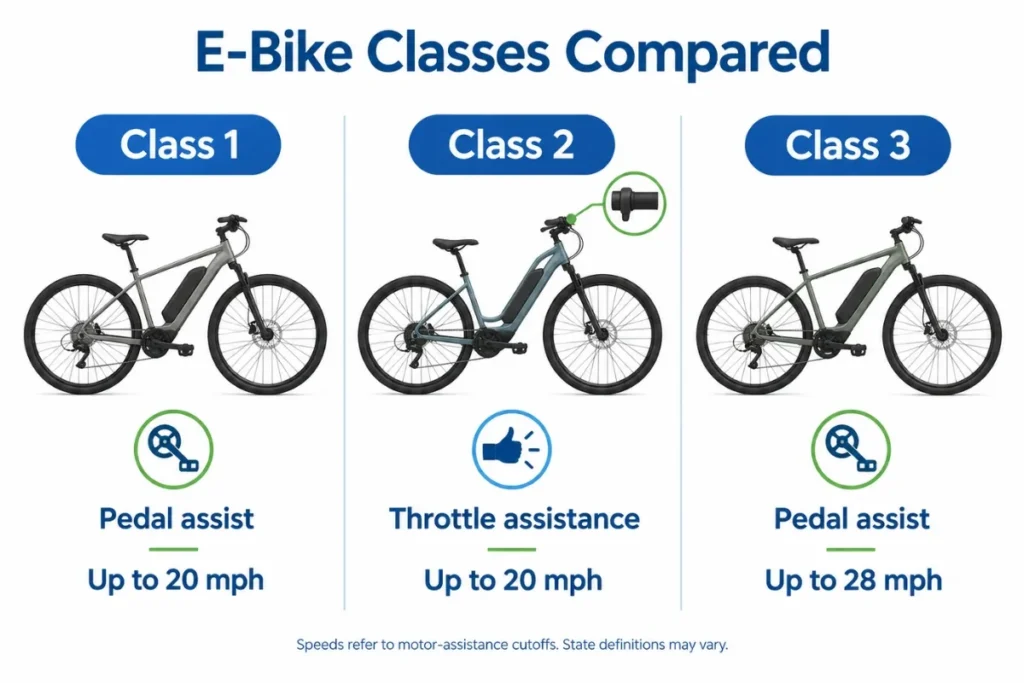
Class 1 and Class 2 e-bikes stop providing motor assistance at 20 mph, but Class 2 lets you ride without pedaling. Class 3 extends pedal assistance to 28 mph. Those are the main distinctions in the common U.S. three-class system.
The class number is not a quality ranking. A Class 3 bike is not automatically more powerful, better built, or more comfortable than a Class 1 or Class 2 model.
What matters is how you want the motor to help. Here’s how the classes compare, what each one means on a ride, and how to identify your bike.
Class 1 vs Class 2 vs Class 3 E-Bikes: Quick Comparison
This table summarizes the common U.S. framework. State definitions can differ, especially for bikes advertised with both a throttle and higher-speed pedal assistance.
| Feature | Class 1 | Class 2 | Class 3 |
|---|---|---|---|
| Main assistance mode | Pedal assist | Throttle propulsion; pedal assist may also be available | Pedal assist |
| Must you pedal for motor assistance? | Yes | No | Yes |
| Motor assistance cuts off at | 20 mph | 20 mph | 28 mph |
| Main difference | Assistance while pedaling | Option to ride without pedaling | Pedal assistance above 20 mph |
The assistance cutoff is where the motor stops adding power, not the fastest the bike can travel. You may go faster by pedaling or coasting downhill, but the motor should no longer be helping beyond that threshold.
Class alone does not tell you how far a bike will go on a charge or how well it will climb. Those depend on the bike’s components, the load it carries, and riding conditions.
What Is a Class 1 E-Bike?
A Class 1 e-bike assists while you pedal and stops assisting at 20 mph under the common definition. It does not provide riding-speed motor propulsion without pedaling.
You pedal much as you would on a conventional bicycle, while the motor contributes some of the effort. Stop pedaling, and the assistance stops.
On a bike with selectable assistance levels, you can adjust how much help you receive. A lower setting may be enough on level ground, while a higher setting can help on a climb. Changing those ordinary assistance levels does not change the bike’s class.
Class 1 suits riders who want motor support while keeping pedaling central to the ride. The label does not tell you whether a particular model is designed for commuting, mountain biking, or carrying cargo.
What Is a Class 2 Electric Bike?
A Class 2 electric bike can propel you without pedaling, typically through a thumb or twist throttle. Motor assistance ends at 20 mph under the common definition.
The throttle can help you pull away from repeated stops or take a short break from pedaling. How smoothly it responds—and how well the bike handles a hill—depends on the model.
On a bike equipped with both controls, you can pedal with assistance or use the throttle without turning the cranks. Pedal-assist levels adjust support during pedaling; the throttle controls motor propulsion without requiring pedaling. The way these controls interact varies between bikes.
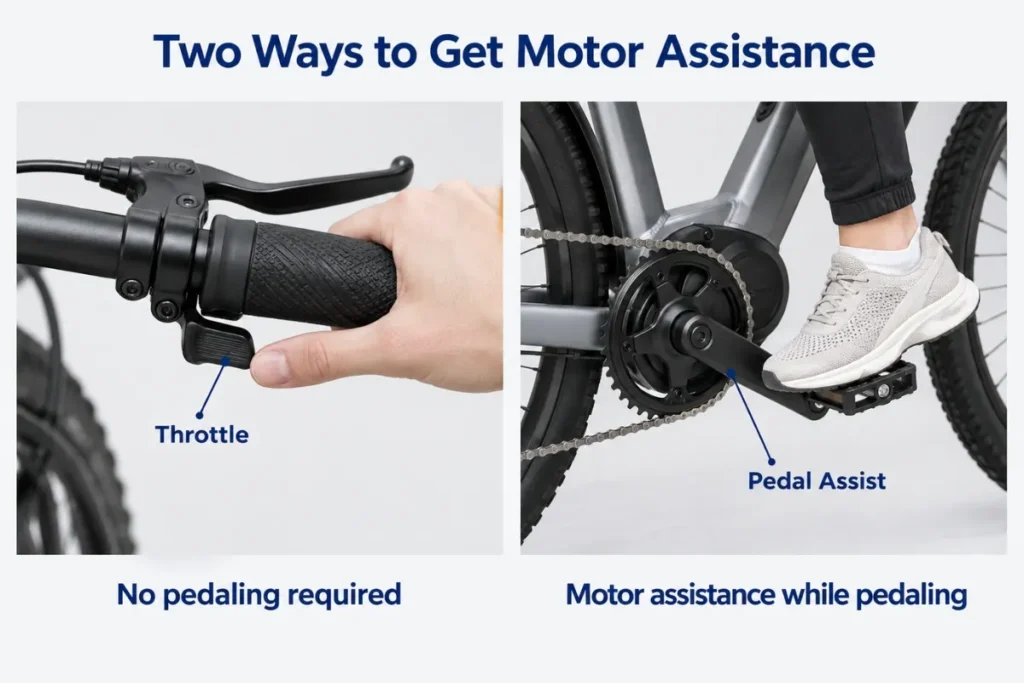
Compared with Class 1, the difference is the option to ride without pedaling. The assisted-speed cutoff remains the same.
What Is a Class 3 E-Bike?
A Class 3 e-bike provides pedal assistance up to 28 mph under the common framework. That is 8 mph beyond the cutoff for Classes 1 and 2.
The difference becomes noticeable when you pedal above 20 mph. A Class 1 motor has stopped helping at that point, while a Class 3 motor can continue assisting.
That extra assisted-speed range can be useful on longer road rides. It does not guarantee that you will reach or maintain 28 mph: hills, headwinds, rider effort, and the bike itself still affect your pace.
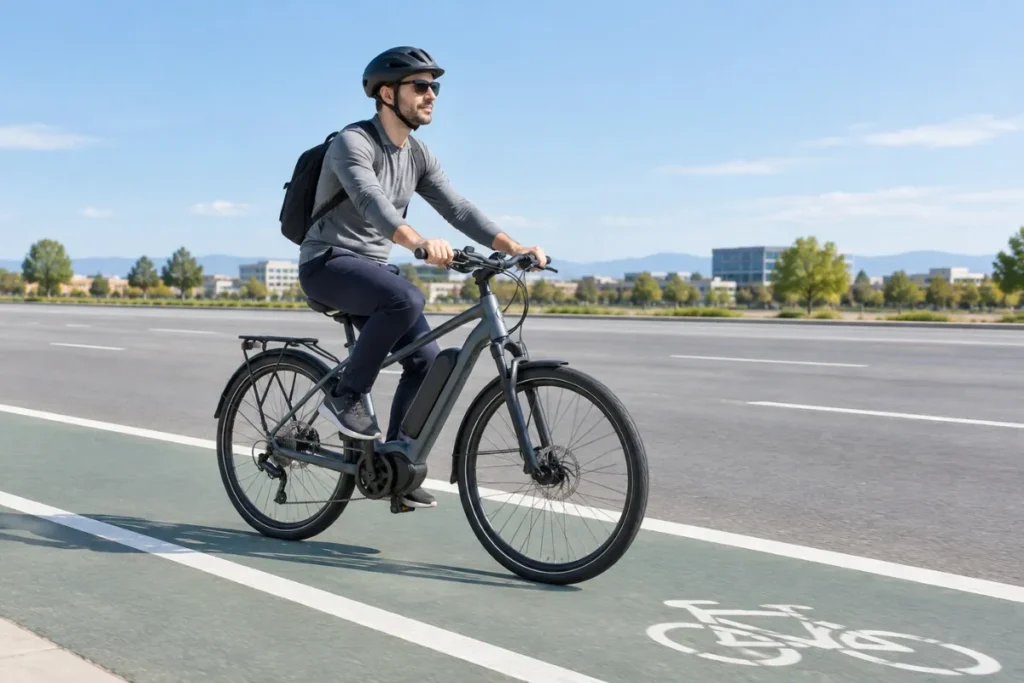
The standard Class 3 definition is pedal-assist based. For a model advertised with both a throttle and 28 mph pedal assistance, check its documented operating modes against your state’s definition rather than relying on the seller’s label alone.
What Are the Main Differences Between E-Bike Classes?
Comparing two classes at a time makes the trade-offs easier to see. The question is not which number is highest, but which capability you need.
Class 1 vs Class 2: Pedal Assist vs Throttle Capability
Class 1 and Class 2 share a 20 mph assistance cutoff under the common framework. Class 2 adds motor propulsion without pedaling.
For someone who wants to pedal throughout an assisted ride, Class 1 may provide everything needed. Class 2 offers another option when pulling away from a stop or resting briefly from pedaling.
Their matching cutoff does not mean they perform identically. Two models can differ in acceleration, climbing ability, range, and handling regardless of class.
Class 2 vs Class 3: Throttle Operation vs Higher-Speed Assistance
Class 2 offers the option to ride without pedaling. Class 3 keeps providing pedal assistance above 20 mph.
On a relaxed ride with frequent stops, a throttle may be more useful than a higher cutoff. On a longer road route where you regularly pedal faster, assistance beyond 20 mph may matter more.
Neither class is a universal upgrade over the other. Choose the capability that fits your route and riding habits.
Class 1 vs Class 3: Different Pedal-Assist Speed Limits
Both classes use pedal assistance, but that assistance ends at different speeds.
When most of your riding stays below 20 mph, Class 3’s higher cutoff may add little value. For regular riding above that speed on suitable roads, the difference is more relevant.
The higher cutoff does not establish which bike climbs better or travels farther on a charge. Compare the motor system, battery, gearing, and bike design separately.
How to Identify Your E-Bike’s Class
Start with the bike’s label, then check the manufacturer’s documentation.
- Look for a class label on the frame. It may show the class, top assisted speed, and motor wattage.
- Find the owner’s manual or official specifications for the exact model and model year.
- Ask the manufacturer for clarification if the information conflicts or the bike has been modified.
For example, Florida requires manufacturers and distributors to apply a permanent label showing the class, top assisted speed, and motor wattage. Label requirements are not identical everywhere.
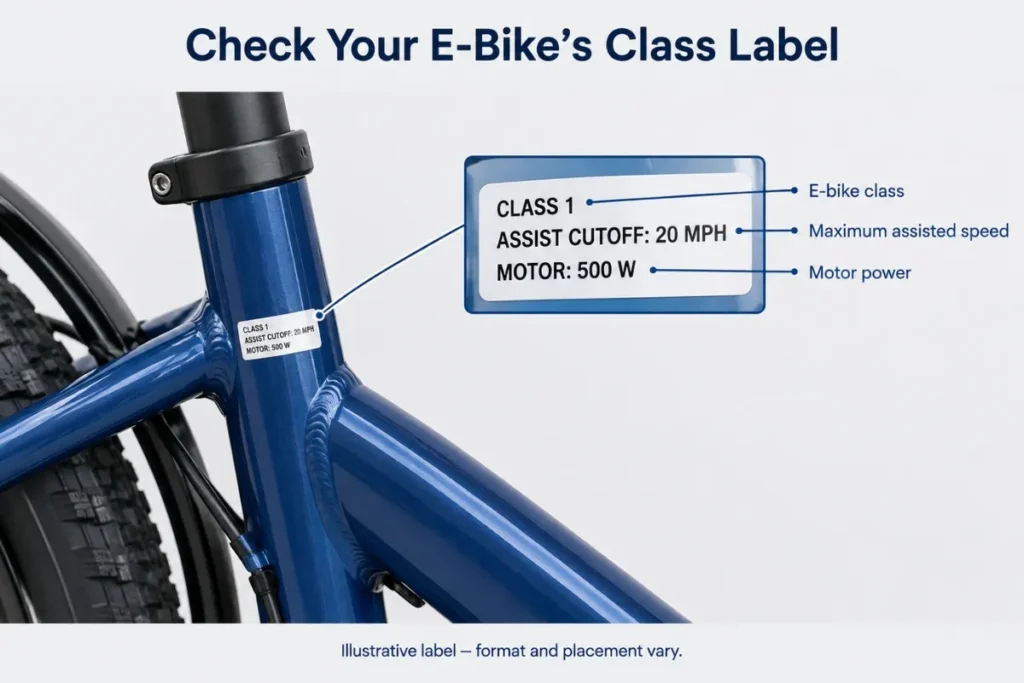
An advertised “top speed” or a number on the display may not tell you where motor assistance stops. Look for the documented assisted-speed limit and throttle operation, particularly on a used or modified bike.
Where Can You Ride Class 1, Class 2, and Class 3 E-Bikes?
A class label does not grant access to every road, path, or trail. Permission depends on the facility and the authority managing it.
Roads and On-Street Bike Lanes
State and local rules determine road access. Permission to ride in an on-street bike lane does not necessarily include a nearby sidewalk or separated path.
Florida, for example, generally gives qualifying e-bikes bicycle-like operating rights on streets, roadways, shoulders, and bicycle lanes, while preserving local regulatory authority.
The bike’s assistance cutoff is not a target riding speed. Intersections, visibility, surrounding traffic, and posted limits should guide your pace.
Shared-Use Paths and Off-Street Bikeways
Check the path’s rules for permitted classes, throttle operation, and speed. Different e-bike types may be treated differently even when their assistance cutoffs match.
Look for an explicit e-bike policy on the managing agency’s website or at the entrance. A general bicycle symbol may not explain every restriction.
On a shared path, leave enough space and time to react to pedestrians, children, and other riders. Crowded or narrow sections may call for a much slower pace than the bike can maintain.
Mountain Bike Trails, Parks, and Public Lands
A trail open to conventional bicycles is not automatically open to e-bikes.
The Bureau of Land Management allows e-bikes on routes open to OHV use, but routes limited to bicycles and non-motorized travel require specific authorization for e-bike access.
Those decisions can distinguish between classes. Around Moab, for example, the BLM opened designated trails to Class 1 e-bikes in March 2026 rather than opening them to every class.
Use the managing agency’s current trail information and posted signs to confirm access. A nearby trail may have a different policy.
Which E-Bike Class Fits Your Riding Needs?
Think about where you ride, your usual pace, and whether you want to pedal whenever the motor is helping. Then compare the actual bikes for fit, comfort, handling, and equipment.
Class 1: If You Prefer Pedal-Assisted Riding
Class 1 may be enough when your rides usually stay below 20 mph, and you enjoy pedaling.
It provides help with everyday riding effort without adding motor-only propulsion. For someone who does not need a throttle or assistance at higher speeds, those missing features may not feel like a compromise.
Class 2: If You Want the Option of Throttle Assistance
Class 2 is worth considering when riding without pedaling would be useful.
Repeated stops, short errands, and occasional breaks from pedaling are situations where that option may matter. Try the controls if possible: throttle placement and response can make a noticeable difference to how comfortable a bike feels.
Class 3: If You Want Higher-Speed Pedal Assistance
Class 3 makes more sense when you regularly pedal above 20 mph on suitable roads.
A longer route with fewer interruptions may give you more opportunity to use that assistance. Frequent stops or lower-speed paths may make it less useful.
Choose Class 3 for riding you expect to do, not because the larger number suggests a better bike.
Frequently Asked Questions About E-Bike Classes
Can a Class 2 E-Bike Go Faster Than 20 mph?
A bike whose motor continues assisting above that threshold does not match the common Class 2 definition.
Can a Class 3 E-Bike Have a Throttle?
Review what each operating mode does rather than assuming the marketing label resolves the question.
Are E-Bike Classes the Same as Pedal-Assist Levels?
Switching between ordinary assistance levels changes the support you receive. A separate setting that changes assisted-speed capability or motor engagement is different and may affect classification.
Does Motor Wattage Determine an E-Bike’s Class?
For example, the BLM framework requires operable pedals and a motor of no more than 750 watts. Meeting that power threshold does not, by itself, establish whether a bike is Class 1, 2, or 3.
Does Disabling the Throttle Change an E-Bike’s Class?
Confirm any manufacturer-approved reconfiguration and applicable labeling requirements before treating the bike as a different class. An app setting alone is not proof of reclassification.