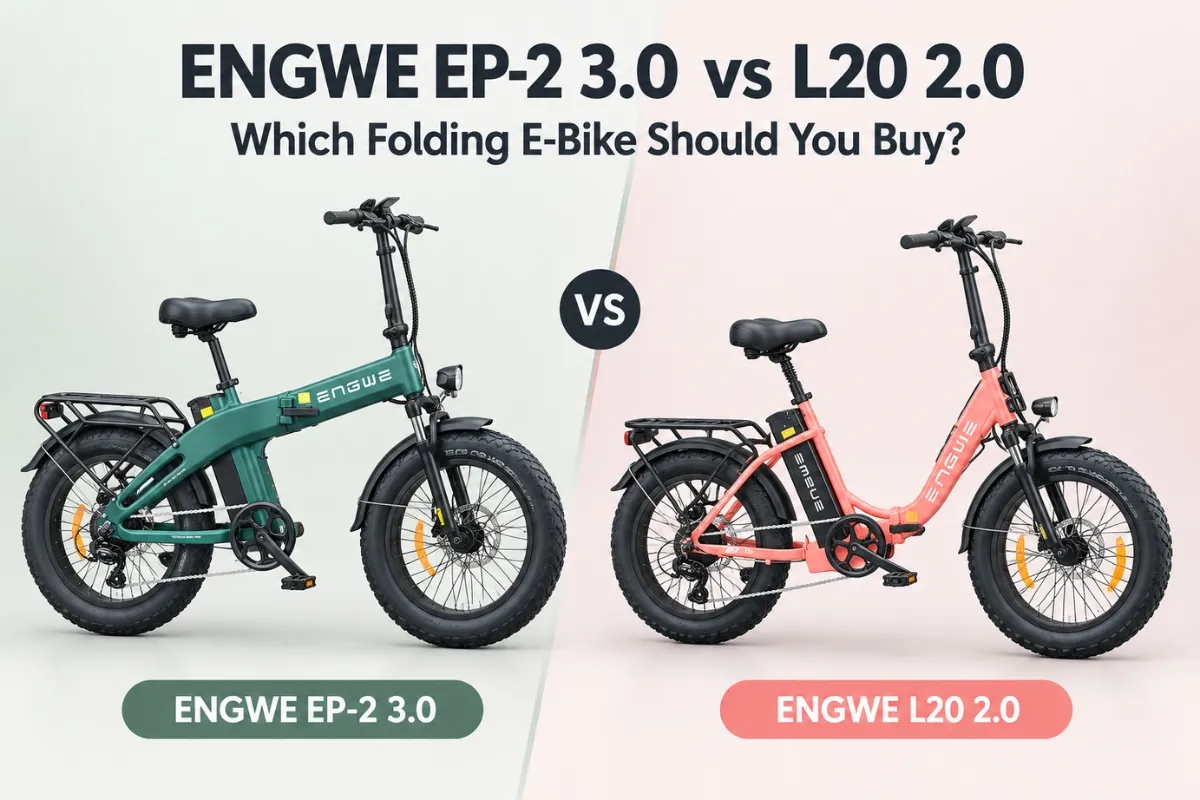
The ENGWE EP-2 3.0 gives you hydraulic brakes, selectable torque or cadence assist, and faster charging. The L20 2.0 weighs less and has a much lower frame opening. Which one makes more sense depends on how you plan to ride, charge, and store it.
Start with fit. Then consider whether you need the EP-2 3.0’s additional equipment or would rather save with the L20 2.0.
This comparison covers the U.S. versions using published product information, not hands-on testing. It looks at braking, charging, rider fit, and storage to help you choose.
Quick Verdict
Choose the ENGWE EP-2 3.0 if you want hydraulic brakes, selectable torque or cadence assist, faster charging, or a higher total payload limit. These are the main reasons to choose it over the L20 2.0.
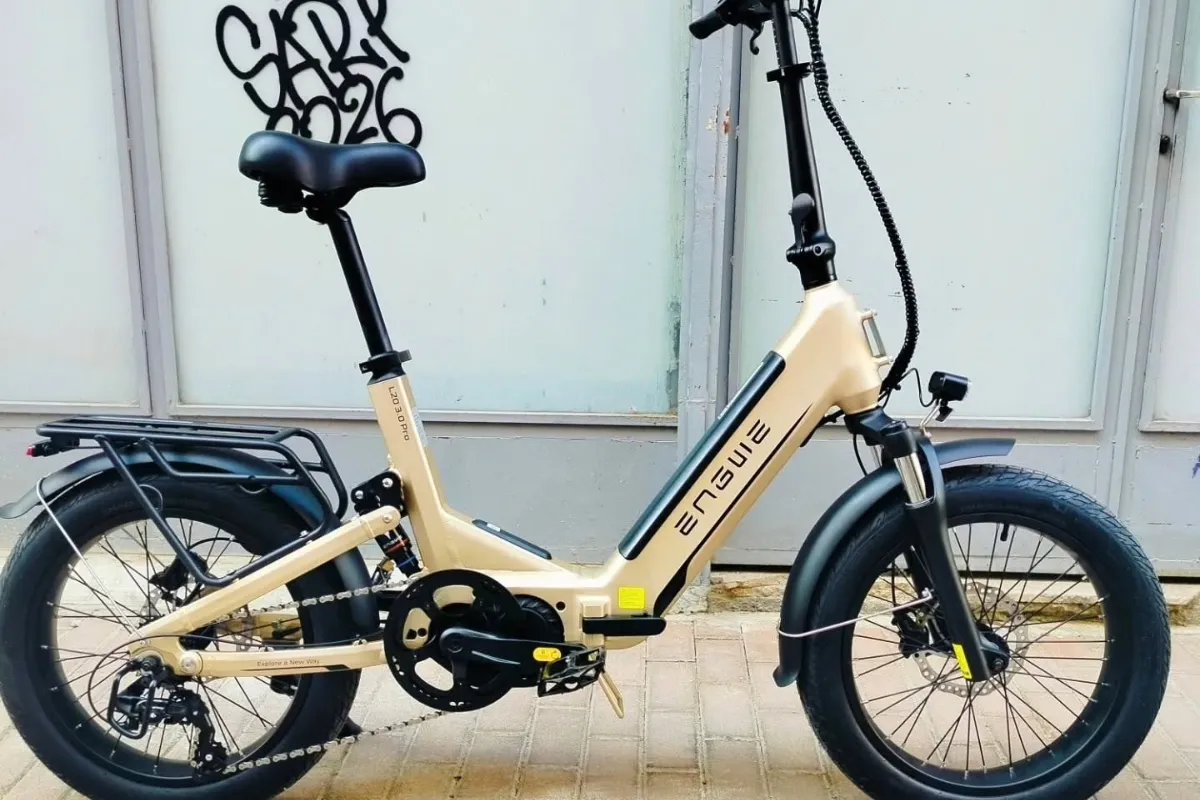
Choose the ENGWE L20 2.0 if easier frame access and lower weight matter more. Its approximately 15-inch step-over height is substantially lower than the EP-2 3.0’s listed 26.8 inches.
For a rider who can charge overnight and does not specifically want the additional features, the L20 2.0 is a sensible starting point. The EP-2 3.0 becomes more appealing when you need to recharge between rides.
If carrying the bike is part of every trip, consider a lighter alternative. The L20 2.0 weighs 68.3 pounds, while the EP-2 3.0 weighs 75.4 pounds.
Current ENGWE Offers
ENGWE EP-2 3.0
For buyers who want hydraulic brakes, selectable assist modes, faster charging, and a higher payload limit.
ENGWE L20 2.0
For buyers prioritizing low frame access, less weight, and a more budget-conscious option.
Offers, colors, and availability can change. Confirm the final price for your selected version before ordering.
Key Differences at a Glance
Both bikes have a 750W rated hub motor, a folding frame, and Shimano seven-speed gearing. Brakes, charging time, frame access, and total payload are more useful differences when deciding between them.
| Specification | ENGWE EP-2 3.0 | ENGWE L20 2.0 |
|---|---|---|
| Motor | 750W rated, 1,500W peak hub motor | 750W rated, 1,125W peak hub motor |
| Manufacturer-listed torque | 90Nm | 75Nm |
| Pedal assist | Five levels; selectable torque or cadence assist | Five levels; sensor type not clearly identified in the current specifications |
| Brakes | Tektro dual-piston hydraulic disc brakes | Mechanical disc brakes |
| Brake rotors | 180mm front and rear | 180mm |
| Battery | Removable 48V 15Ah, 720Wh | Removable 52V 13Ah, approximately 676Wh |
| Manufacturer’s maximum range | Up to 65 miles in PAS 1 | Up to 68 miles in PAS 1 |
| Manufacturer’s charging time | Approximately 2 hours | Approximately 6.5 hours |
| Charger | 8A charger included | Charger included; output not specified in the current specifications table |
| Listed top speed | Up to 28 mph; separate throttle limit not stated | 20 mph on throttle; 28 mph with pedal assist |
| Tires | 20 × 4 inches | 20 × 3 inches |
| Front suspension | 50mm travel with adjustable lockout | Suspension fork |
| Suspension seatpost | Not listed | Specifically listed for the Orange version; verify other colors |
| Gearing | Shimano seven-speed | Shimano seven-speed |
| Bike weight | 75.4 lb | 68.3 lb |
| Maximum total payload | 330 lb | 264 lb |
| ENGWE-listed rider height | 5’5″–6’2″ | 5’0″–6’0″ |
| Step-over height | Approximately 26.8 inches | Approximately 15 inches |
| Saddle height range | Approximately 34.6–40.9 inches | Approximately 35.4–40.6 inches |
| Folded dimensions | Approximately 38.2 × 20.9 × 31.9 inches, L × W × H | Approximately 40.1 × 17.7 × 31.5 inches; ENGWE’s labels do not clearly establish the L × W × H order |
| Connected features | GPS, 4G, Bluetooth, app monitoring, motion alerts, and OTA updates | Comparable connected features not listed |
Specifications are based on ENGWE’s U.S. product information. Converted measurements are approximate. Use the listed rider-height ranges as a starting point, then check saddle height, frame clearance, and reach for your individual fit.
Range and charging figures are manufacturer estimates. Leave a range reserve for your regular trips rather than planning around the maximum advertised distance.
Price and Value
Check the current offers before comparing costs. A small price difference may make the EP-2 3.0’s upgrades appealing; a larger one gives you more reason to consider the L20 2.0.
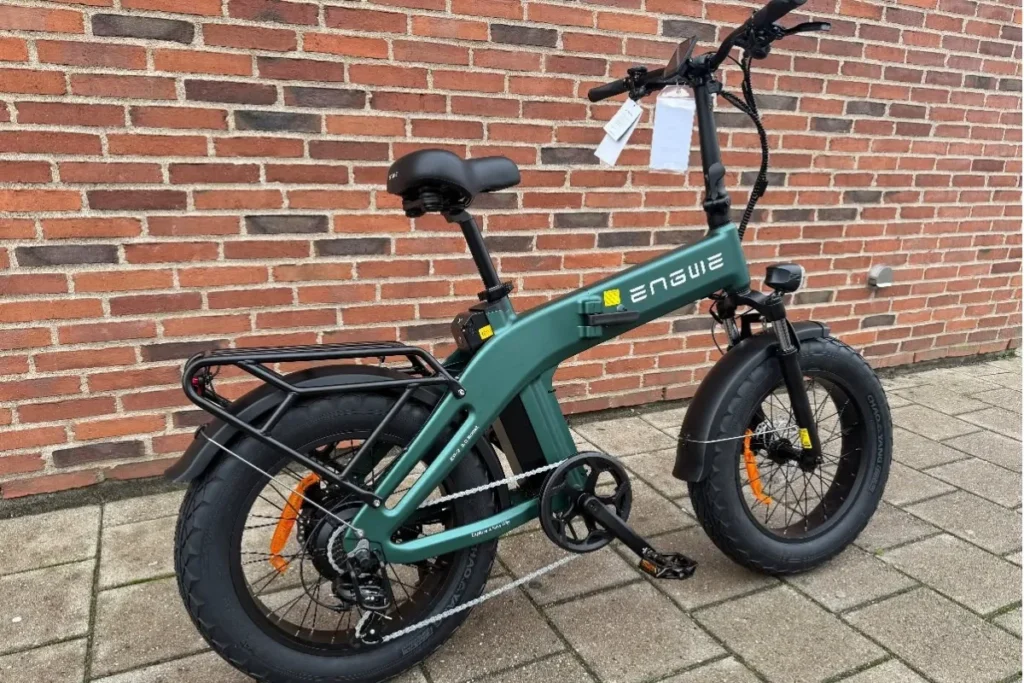
Ask yourself which features you would use regularly. Hydraulic brakes, faster charging, and selectable assist modes are useful reasons to choose the EP-2 3.0, but you do not need to pay for them if they are not priorities.
If the L20 2.0 fits you and works with your charging routine, it may be all you need. Both models already have lights, fenders, and a rear rack, so choosing between them is not a matter of buying a fully equipped bike versus a bare frame.
Motor, Assist, and Brakes
Motor Power and Payload
Both bikes use a 750W rated hub motor. ENGWE lists the EP-2 3.0 at 1,500W peak and 90Nm, compared with 1,125W peak and 75Nm for the L20 2.0.
The EP-2 3.0 therefore has higher listed power and torque. Those numbers alone do not tell you how much faster it will accelerate or what speed it will maintain on a particular hill.
If steep climbs are central to your decision, look for testing that resembles your route and combined rider-and-cargo load. Do not choose solely by the highest peak-power figure.
Payload gives you a more definite limit to work with. The EP-2 3.0 allows 330 pounds in total, versus 264 pounds for the L20 2.0. Add your weight and everything you expect to carry before deciding whether either allowance is sufficient.
Pedal-Assist Options
ENGWE lists selectable torque or cadence assist for the EP-2 3.0. Torque sensing responds to effort at the pedals, while cadence sensing detects pedal rotation.
If you want assistance that responds to how hard you pedal, the EP-2 3.0 has a confirmed torque-assist option. The ability to switch modes also gives you another way to adjust the bike to your preference.
The L20 2.0 has five assist levels, but its current official specifications do not clearly identify the sensor type. If torque-responsive assistance is a must-have, the EP-2 3.0 is the clearer choice based on the published information.
Throttle and Assist Speeds
ENGWE lists the L20 2.0 at up to 20 mph using the throttle and up to 28 mph with pedal assist.
The EP-2 3.0 page lists a top speed of up to 28 mph without providing a separate throttle-only limit. Do not interpret that as confirmation of 28 mph throttle-only operation.
Before buying either model, check the rules for the roads, paths, and trails where you intend to ride.
Hydraulic vs. Mechanical Brakes
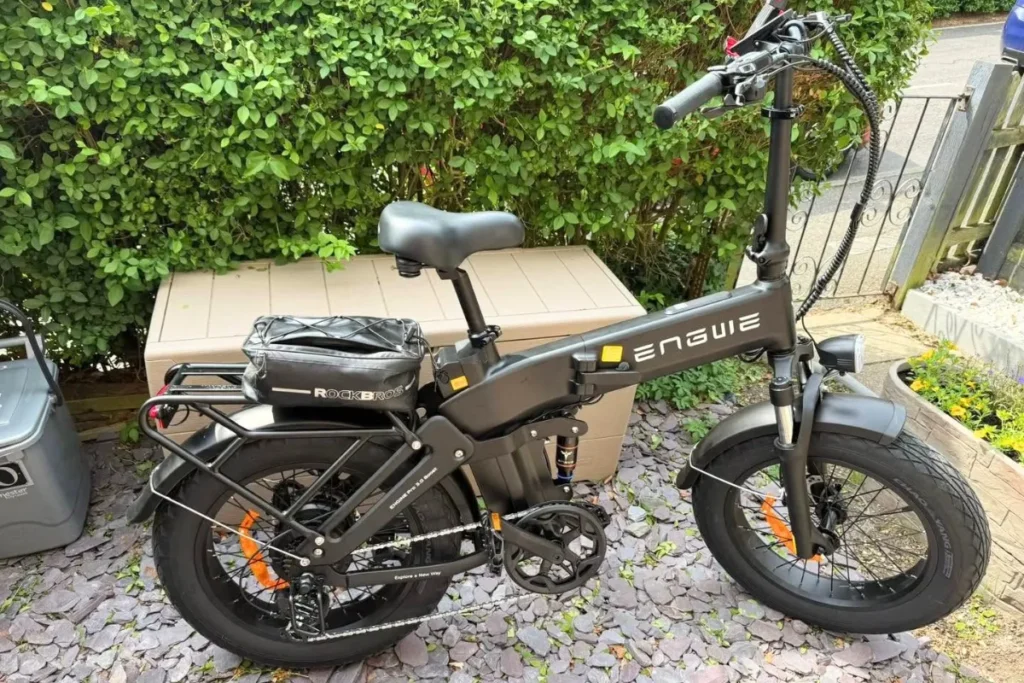
The EP-2 3.0 uses Tektro dual-piston hydraulic disc brakes, while the L20 2.0 uses mechanical disc brakes. Both have 180mm rotors.
Hydraulic disc brakes generally provide more progressive braking with less finger effort, and their pistons automatically compensate for brake-pad wear. Mechanical disc brakes use cables and require periodic adjustment as the pads wear.
Favor the EP-2 3.0 if lower lever effort and less routine pad adjustment matter to you. Hydraulic brakes still need inspection and maintenance, so they are not a maintenance-free option.
The L20 2.0 remains worth considering if you are comfortable maintaining mechanical discs. Brake type alone does not establish a specific stopping distance.
Battery, Range, and Charging
Compare Battery Capacity
The EP-2 3.0 has a 48V 15Ah battery rated at 720Wh. The L20 2.0 uses a 52V 13Ah battery, which works out to approximately 676Wh.
That gives the EP-2 3.0 about 6.5% more stored energy. It is a modest difference, not a reason to expect dramatically longer rides.
The L20 2.0’s higher voltage does not mean it has the larger battery. Watt-hours account for both voltage and amp-hour capacity, making them more useful for comparing stored energy.
Plan Around Your Commute
ENGWE lists up to 65 miles for the EP-2 3.0 and up to 68 miles for the L20 2.0, with both maximum figures associated with PAS 1.
The three-mile difference should not decide the purchase. For a commuter e-bike, the more useful question is whether your usual round trip leaves a comfortable reserve.
Consider your hills, preferred assistance level, and how much pedaling you plan to contribute. If your route depends on reaching the maximum advertised distance every day, look for more range rather than cutting it that close.
Decide Whether You Need Fast Charging
ENGWE lists approximately two hours to charge the EP-2 3.0 with its included 8A charger, compared with about 6.5 hours for the L20 2.0.
If you recharge overnight, either listed time may work. Finishing earlier adds little convenience when you will not ride again until morning.
The EP-2 3.0 makes more sense when you regularly need to replenish the battery between trips on the same day. That is a clearer reason to choose it than the relatively small difference in battery capacity.
Rider Fit and Comfort
Check Frame Access
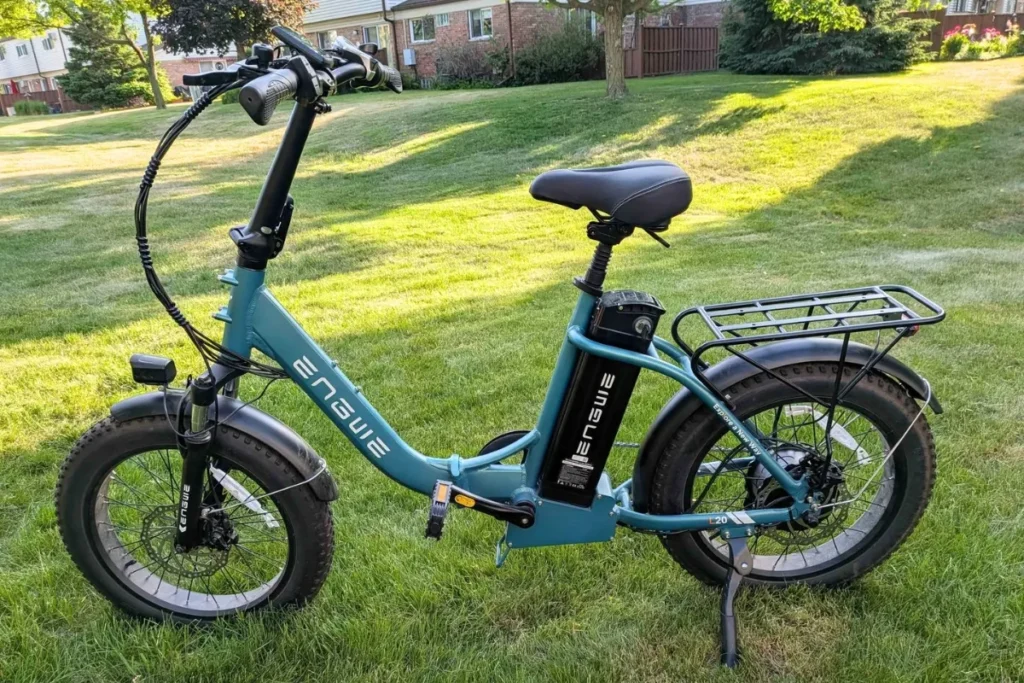
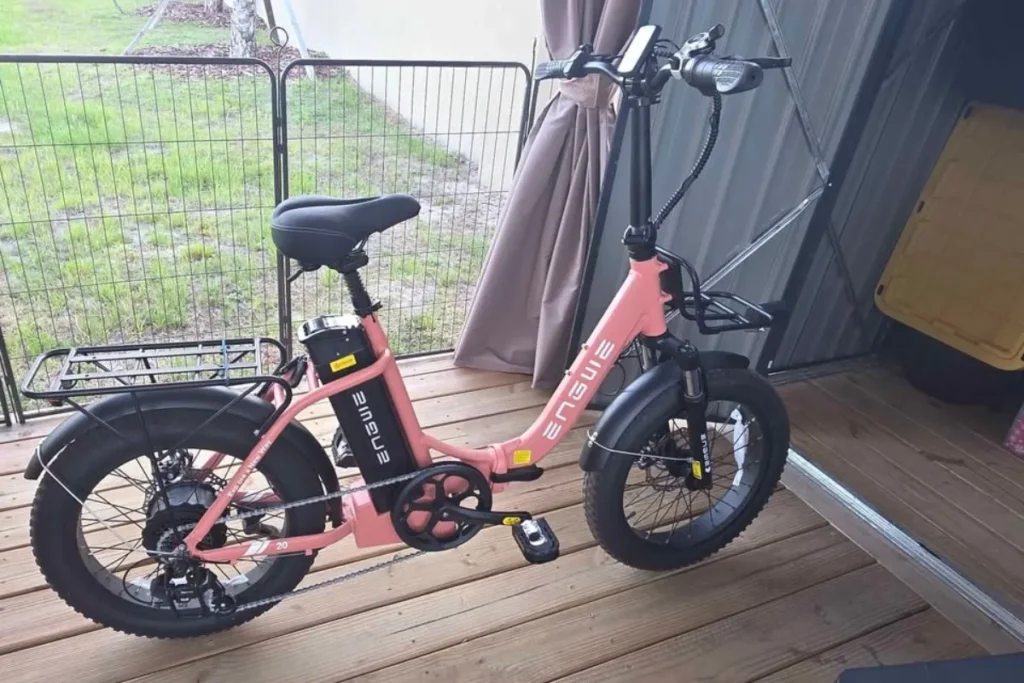
The L20 2.0’s listed step-over height is approximately 15 inches, compared with about 26.8 inches for the EP-2 3.0. Its lower opening is a strong reason to consider it if lifting a leg over a higher frame is difficult or inconvenient.
But a step-through e-bike does not automatically have a low saddle. The L20 2.0’s listed saddle range is approximately 35.4–40.6 inches, while the EP-2 3.0’s is approximately 34.6–40.9 inches.
Check access and riding position separately. Make sure you can mount comfortably, reach the controls, pedal in a suitable position, and support the bike when stopped.
If the frame opening is your main concern, favor the L20 2.0. If saddle height or reach is the issue, compare those dimensions before choosing either bike.
Tires and Suspension
The EP-2 3.0 uses 20 × 4-inch tires and lists a 3mm puncture-protection layer. Its suspension fork provides 50mm of travel and an adjustable lockout.
The L20 2.0 uses 20 × 3-inch tires and a suspension fork. Its page describes front-fork and seatpost suspension while separately highlighting a shock-absorbing seatpost for the Orange version, so confirm the equipment included with your selected color.
The L20 2.0’s “full suspension” wording refers to the fork and seatpost, not a rear-suspension frame.
Treat these as equipment differences rather than a comfort ranking. When choosing a fat tire electric bike, do not assume that wider tires or a suspension label will compensate for an unsuitable riding position.
Folding and Storage
Measure Your Available Space
The EP-2 3.0’s folded dimensions are approximately 38.2 inches long, 20.9 inches wide, and 31.9 inches high. Measure both your storage area and the opening through which the bike must pass.
ENGWE lists the L20 2.0 at approximately 40.1 × 17.7 × 31.5 inches, but its individual labels do not clearly establish the length, width, and height order. Confirm the orientation before relying on those measurements for a tight compartment.
Leave clearance instead of planning an exact fit. The EP-2 3.0 also lists non-folding pedals, which deserve attention if your storage space is narrow.
Be Realistic About Lifting
The L20 2.0 weighs 68.3 pounds, compared with 75.4 pounds for the EP-2 3.0. The roughly seven-pound difference favors the L20 2.0, but neither is a lightweight folding electric bike.
Think about the hardest lift you will make regularly. Rolling a bike into ground-floor storage is different from loading it over a trunk lip or carrying it upstairs.
Both batteries are removable, but the reviewed specifications do not provide complete battery-out bike weights. Do not base your decision on an assumed reduction.
For occasional folding, the weight may be acceptable. If carrying is part of every journey, keep looking for a lighter option.
Final Recommendation
Choose the EP-2 3.0
Choose the EP-2 3.0 if you want hydraulic brakes, selectable torque or cadence assist, or faster charging. Its higher payload limit is another reason to consider it if you and your cargo exceed the L20 2.0’s allowance.
Choose the L20 2.0
Choose the L20 2.0 if a low step-through opening and lower bike weight matter most. If you can charge overnight and do not need the EP-2 3.0’s upgrades, it is a sensible option.
Keep Looking If Neither Fits
If either bike is too heavy to handle or does not fit you comfortably, keep looking. Being able to fold it will not solve those problems.
Frequently Asked Questions
Are the Batteries Removable?
What Equipment Is Included?
Check your selected offer before assuming that baskets, bags, mirrors, or other optional accessories are included.
What Does the App Do?
Use tracking and alerts alongside a suitable physical lock, not as a replacement for one.
Is Payload the Rack Limit?
The reviewed product specifications do not clearly establish separate rear-rack capacities for both models. Confirm the rating and accessory compatibility before carrying a heavy load or fitting passenger equipment.