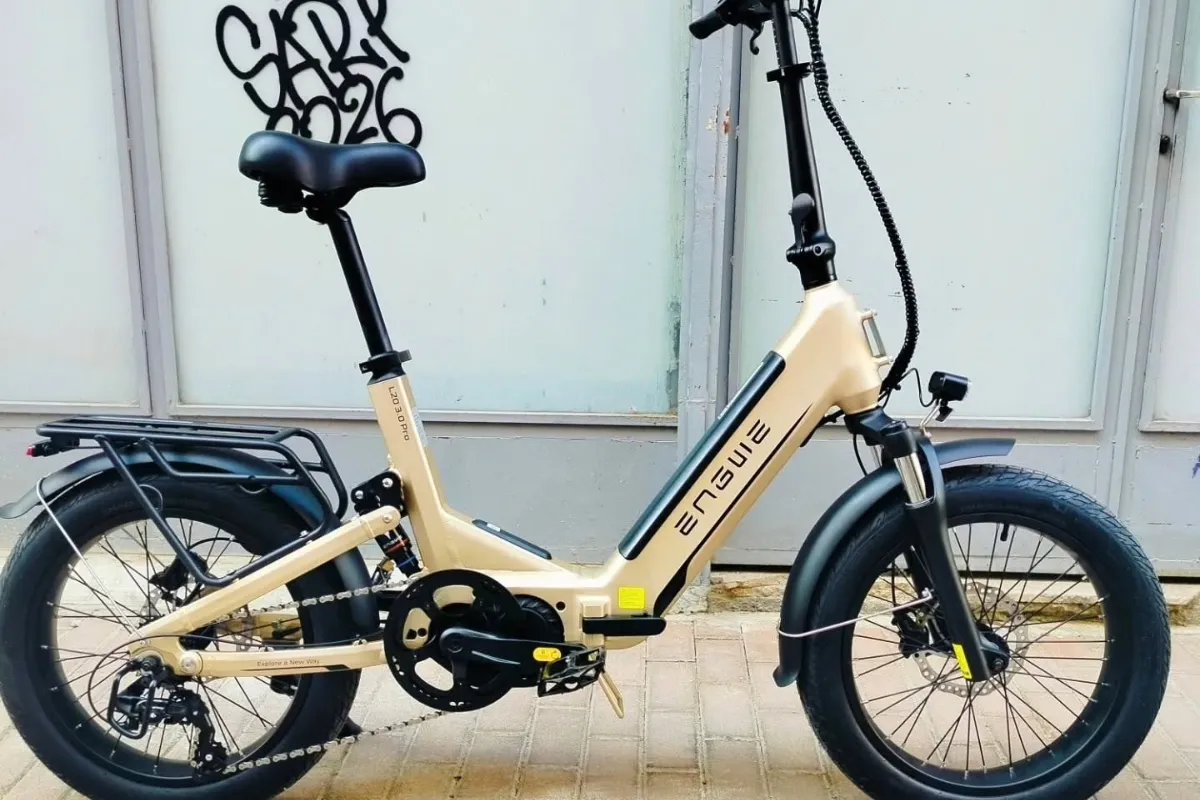
For many riders in the United States, the answer is no. If your electric bike meets the definition established by the state where you ride, you can often use it without a driver’s license or motorcycle endorsement. Washington takes this approach directly: the state exempts qualifying electric-assisted bicycles from driver’s-license and vehicle-registration requirements altogether.
That rule isn’t universal. Your e-bike’s motor power, assisted speed, throttle operation, pedals, and current configuration can all affect its legal classification. State law ultimately determines whether it is an electric bicycle, moped, motor-driven cycle, off-highway vehicle, or motorcycle.
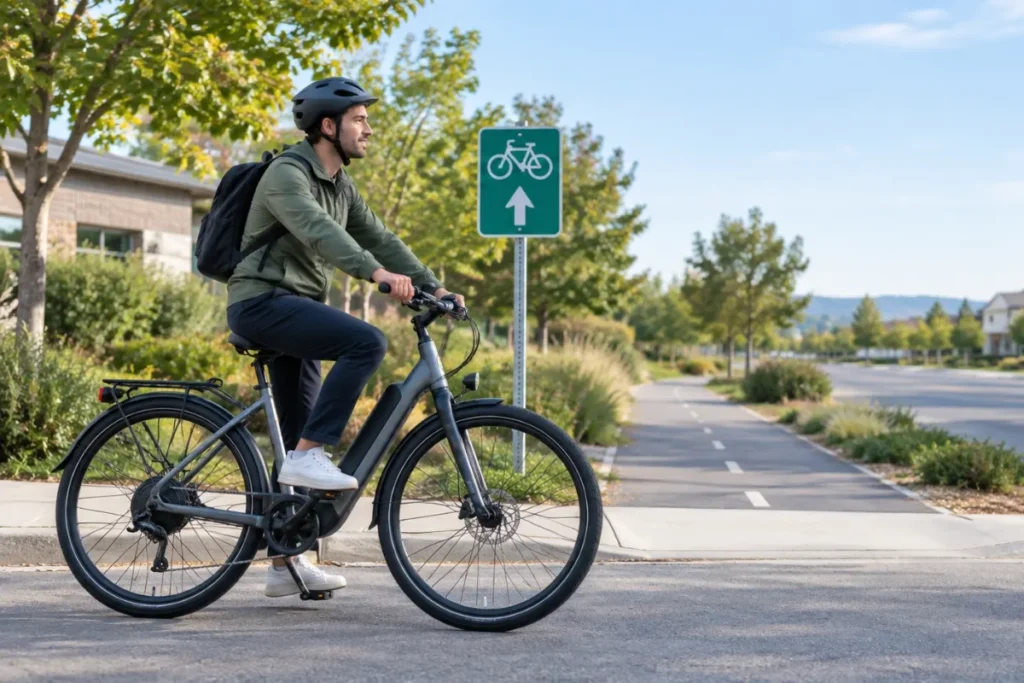
New Jersey is one of the clearest 2026 exceptions. Riders must be at least 15 and carry either a valid driver’s license or an e-bike/moped license, while covered e-bikes must also be registered with the New Jersey Motor Vehicle Commission.
This guide explains the difference between federal and state rules, when licensing may be required, and how to verify the requirements that apply to your bike.
Do You Need an E-Bike License?
In many states, you don’t need a driver’s license to operate a qualifying electric bicycle. But not every state defines an e-bike the same way, and not every state recognizes all three e-bike classes.
Don’t rely on the product name alone. A manufacturer or online seller may describe a high-powered electric two-wheeler as an “e-bike,” but that label doesn’t determine its legal status.
Whether you need a license usually comes down to where you ride, what your bike is physically capable of, and how your state’s law treats that combination. That means checking the state itself, whether the pedals actually work, the motor’s rated power, the top assisted speed, whether it runs on throttle or pedal assist, whether the motor keeps pushing past the legal cutoff, and whether anyone has modified it since it left the factory.
If the vehicle qualifies as an electric bicycle, it may receive bicycle-style treatment. If it falls outside the definition, a different set of licensing, registration, equipment, and insurance rules may apply.
What Legally Counts as an E-Bike?
Federal and state governments address different parts of e-bike regulation. Understanding that distinction can prevent a common mistake: assuming the federal definition automatically decides where and how you may ride.
The Federal Definition
Under federal consumer-product law, a low-speed electric bicycle is a two- or three-wheeled vehicle with fully operable pedals and an electric motor of less than 750 watts. When operated solely by the motor under the conditions specified in the statute, it can’t reach 20 mph or more.
The U.S. Consumer Product Safety Commission provides official guidance on bicycle safety requirements and the federal consumer-product framework for qualifying low-speed electric bicycles.
The phrase “less than 750 watts” matters. It isn’t identical to “750 watts or less,” though individual states may use their own power limits and wording.
The federal definition mainly determines how qualifying bikes are regulated as consumer products. It doesn’t establish one nationwide set of licensing, road-access, age, helmet, or trail rules.
State E-Bike Classes
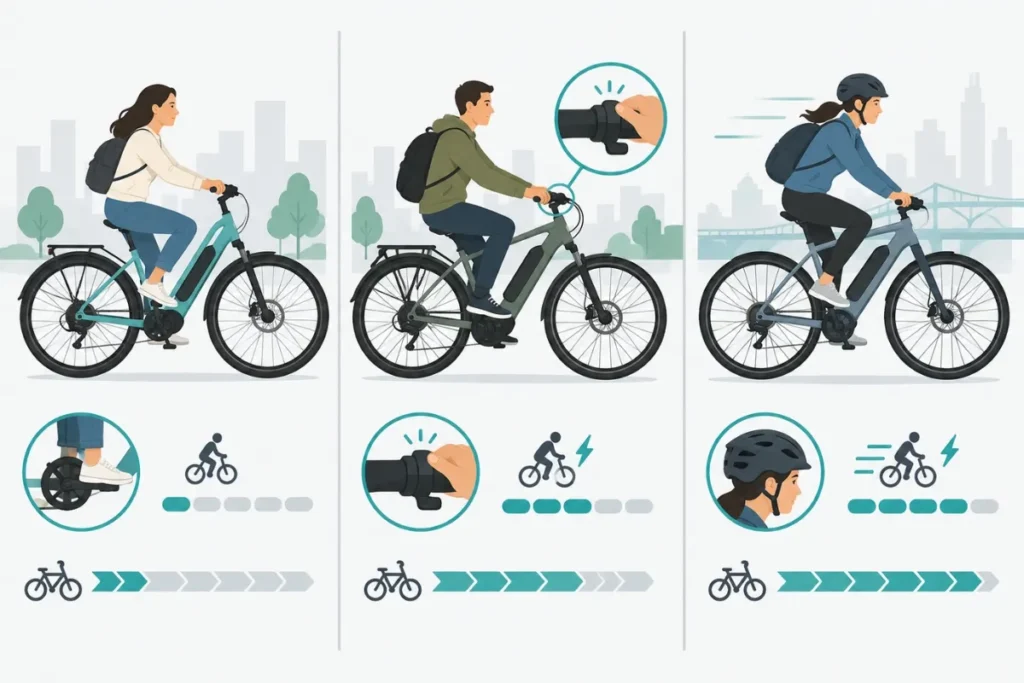
Many states use some version of a three-class system, but the exact definitions should always be checked in the applicable state code. A common framework looks like this: Class 1 assists only while you’re pedaling and cuts off at 20 mph; Class 2 can propel the bike without pedaling, usually through a throttle, and also cuts off at 20 mph; Class 3 assists while pedaling up to 28 mph.
These classifications aren’t a substitute for checking state law. Massachusetts currently defines electric bicycles as having motors of no more than 750 watts and top assisted speeds of 20 mph, which covers Class 1 and Class 2 bikes but stops short of the full three-class framework other states use.
When It’s No Longer an E-Bike
An electric two-wheeler can fall outside a state’s e-bike definition for several reasons. It might have no fully operable pedals, exceed the applicable motor-power limit, keep assisting above the permitted speed, use throttle propulsion beyond the state’s Class 2 limit, or have been modified. Hence, its current performance exceeds legal limits.
Some vehicles are built and equipped more like a moped, motorcycle, or off-highway vehicle from the start. Falling outside the e-bike definition doesn’t automatically mean the vehicle can be made road-legal by obtaining a motorcycle license.
Some vehicles also need registration, a title, a VIN, required road equipment, insurance, or proof that they meet applicable vehicle standards. In some cases, a noncompliant model can’t legally be registered for public-road use at all.
State Licensing Requirements
State vehicle codes control rider licensing and road use, while cities, counties, parks, and trail managers may add their own access rules on top. There’s no single national answer here. What applies in one state may not apply thirty miles across a border.
New Jersey
New Jersey introduced a comprehensive licensing and registration system in 2026. To operate an e-bike, a rider must be at least 15 and have either a valid driver’s license or an e-bike/moped license.
All covered e-bikes must be registered with the New Jersey Motor Vehicle Commission, which publishes the current licensing and registration requirements on its official e-bike page.
Riders who already hold an eligible driver’s license don’t need a separate e-bike license. Someone without one has to apply for an e-bike/moped permit, pass the required knowledge and vision tests, complete the practice period, and pass a road test.
Insurance depends on the vehicle category. New Jersey requires insurance for motorized bicycles but not for low-speed electric bicycles, so owners need to determine which definition their model satisfies.
Hawaii
Hawaii requires electric bicycles to be registered and charges a permanent $30 registration fee. The state’s 2026 legislation also prohibits operating an unregistered electric bicycle on a public roadway, sidewalk, or bicycle facility.
Registration applies to the bike, not the rider, so it shouldn’t be confused with a driver’s license requirement. Honolulu’s Department of Customer Services lists the same $30 e-bike registration fee and requires the motor’s wattage to be included on the application.
Massachusetts
Massachusetts draws a clear line between an electric bicycle and a motorized bicycle. A vehicle meeting the state’s electric-bicycle definition isn’t considered a motor vehicle, and its operator isn’t subject to motor-vehicle operator rules just because they’re riding that e-bike.
This distinction matters because Massachusetts does require a valid driver’s license or learner’s permit to operate a motorized bicycle. That rule shouldn’t get applied to an electric bicycle that satisfies the state’s separate definition.
Alaska
Alaska deserves extra caution because online summaries frequently conflict on this issue. A 2023 bill would have created Class 1, Class 2, and Class 3 definitions and treated qualifying electric-assisted bicycles as bicycles, but the governor vetoed it on July 20, 2023.
Because that bill never became law, riders shouldn’t assume its proposed bicycle-style exemptions are currently in effect. Existing Alaska legislative material has described electric bicycles within the motor-driven-cycle framework, so riders should get current guidance from the Alaska DMV before using one on public roads.
When Motorcycle Rules May Apply
You don’t usually need a motorcycle endorsement just because a bicycle has an electric motor. The licensing question changes when the vehicle falls outside the state’s e-bike definition and enters another legal category, such as a moped, motorized bicycle, motor-driven cycle, limited-use motorcycle, motorcycle, off-highway vehicle, or non-road-legal electric vehicle.
Each category can carry different requirements. A motorcycle endorsement alone may not be enough if the vehicle can’t be titled or registered in the first place.
High-Powered Models
A motor rated above the applicable state limit can disqualify a vehicle from e-bike status, but wattage is only one part of the analysis. A 1,000W model may be treated as a moped, motorcycle, or off-highway vehicle, depending on its speed, pedals, equipment, certification, and state law.
It may even be a vehicle that can’t legally be registered for public-road use at all. The wattage number on the spec sheet tells you far less than checking how your specific state classifies that specific bike.
Modified E-Bikes
Not every modification changes an e-bike’s legal status. Swapping the seat, tires, display, or other ordinary components generally doesn’t affect its class.
What can change the classification is anything that increases motor power, raises the assisted-speed limit, enables prohibited throttle operation, or otherwise pushes the bike outside the applicable state definition. Check the bike’s current configuration rather than trusting its original class label.
Modifications can also affect warranty or insurance coverage, so review the manufacturer’s warranty and your insurance policy before changing the motor, controller, throttle, or speed limiter.
Electric Dirt Bikes and E-Motos
Most electric dirt bikes and e-motos shouldn’t be assumed to qualify as electric bicycles. Many lack functional pedals, exceed ordinary e-bike power or speed limits, or are built and certified only for off-road use.
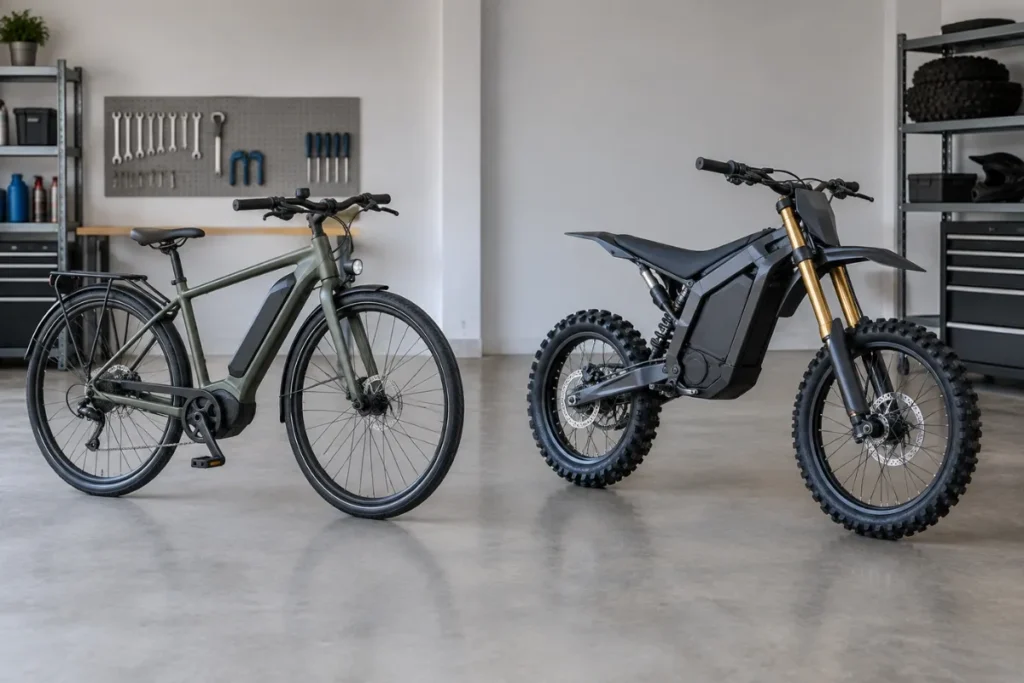
Some can be registered as motorcycles or off-highway vehicles. Others can’t legally be operated on public roads at all, even if the rider has a motorcycle license.
Requirements also shift depending on where the vehicle is used. A public street, a designated OHV area, a public trail, and private property can all have completely different rules.
License, Registration, and Insurance
These terms describe separate legal requirements, and a state can require one without requiring the others.
A rider license establishes that the operator has permission to use a particular vehicle category, such as a standard driver’s license, motorcycle endorsement, moped license, or state-specific e-bike credential. Many jurisdictions skip this entirely for a qualifying e-bike. Washington states outright that no driver’s license is required to operate an electric-assisted bicycle. New Jersey is an exception, requiring an eligible driver’s license or an e-bike/moped license.
Registration connects the bike to an owner or official record, but it doesn’t necessarily authorize the rider to operate it. Hawaii shows this split clearly: the electric bicycle must be registered, yet that requirement has nothing to do with rider licensing.
A title records legal ownership, and a license plate identifies a registered road vehicle. Whether either applies depends on the category assigned under state law. A qualifying e-bike often needs neither once the vehicle becomes a moped, motorcycle, or motor-driven cycle; that can change.
Insurance requirements also depend on classification. New Jersey requires it for motorized bicycles but not for low-speed electric bicycles. Don’t assume a homeowners, renters, auto, or motorcycle policy automatically covers your e-bike. Coverage varies by insurer and policy, so check the actual terms or get written confirmation.
How to Check Your E-Bike
Start with the bike itself. Check whether the pedals are fully operable, what the motor is actually rated at, the top speed under pedal assist versus throttle alone, whether the motor keeps assisting past its advertised cutoff, the manufacturer’s class label, and anything you’ve changed since buying it.
Don’t rely solely on an advertised peak-watt figure. State statutes may refer to nominal, rated, maximum, or output power, and those terms aren’t always interchangeable.
From there, check the state definition directly through your DMV, DOT, legislature, or official vehicle-code website. Look at how the state defines electric bicycle, motorized bicycle, moped, motor-driven cycle, motorcycle, and off-highway vehicle. Read the operator requirements alongside the definitions.
A page explaining where an e-bike can be ridden may not cover licensing, registration, or insurance at all.
Confirm the effective date while you’re at it. E-bike rules can shift during the year. New Jersey rolled out its new licensing and registration program in 2026, and Hawaii’s Act 266 became law without the governor’s signature on July 16, 2026. Make sure you’re looking at current law rather than a proposed bill that never passed.
Finally, check local access rules. A bike can be license-free under state law but still restricted from a particular sidewalk, trail, park, or shared-use path. Review city and county ordinances along with park department and trail-manager policies, and repeat the check whenever you cross state lines.
Frequently Asked Questions
Do Class 3 E-Bikes Require a License?
Not every state recognizes Class 3 as an electric-bicycle category, so check your state’s definition before trusting the manufacturer’s label.
Does a Throttle Mean You Need a License?
It becomes a classification issue if the throttle powers the bike above the allowed cutoff or the state doesn’t recognize that setup as an electric bicycle.
Does a 750W E-Bike Require a License?
You’ll also need to check the bike’s assisted speed, pedals, throttle behavior, modifications, and your state’s definition. A “750W” label on the box doesn’t guarantee compliance everywhere.
Does a 1,000W E-Bike Require a License?
Getting a motorcycle license doesn’t automatically make it legal. It may also need a qualifying VIN, title, registration, insurance, and required road equipment.
Do Electric Dirt Bikes Require a License?
Some models need motorcycle or off-highway-vehicle credentials. Others can’t legally be registered for public-road use at all, so a rider’s license by itself won’t make them street legal.