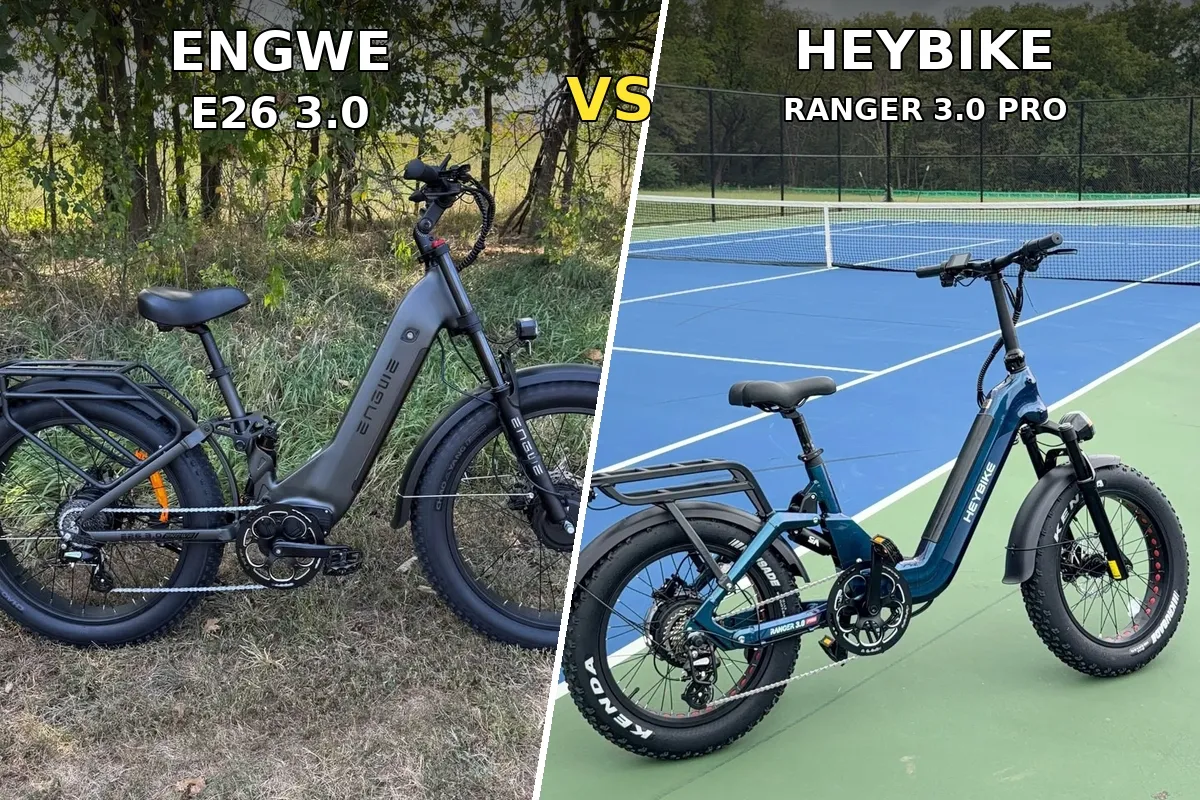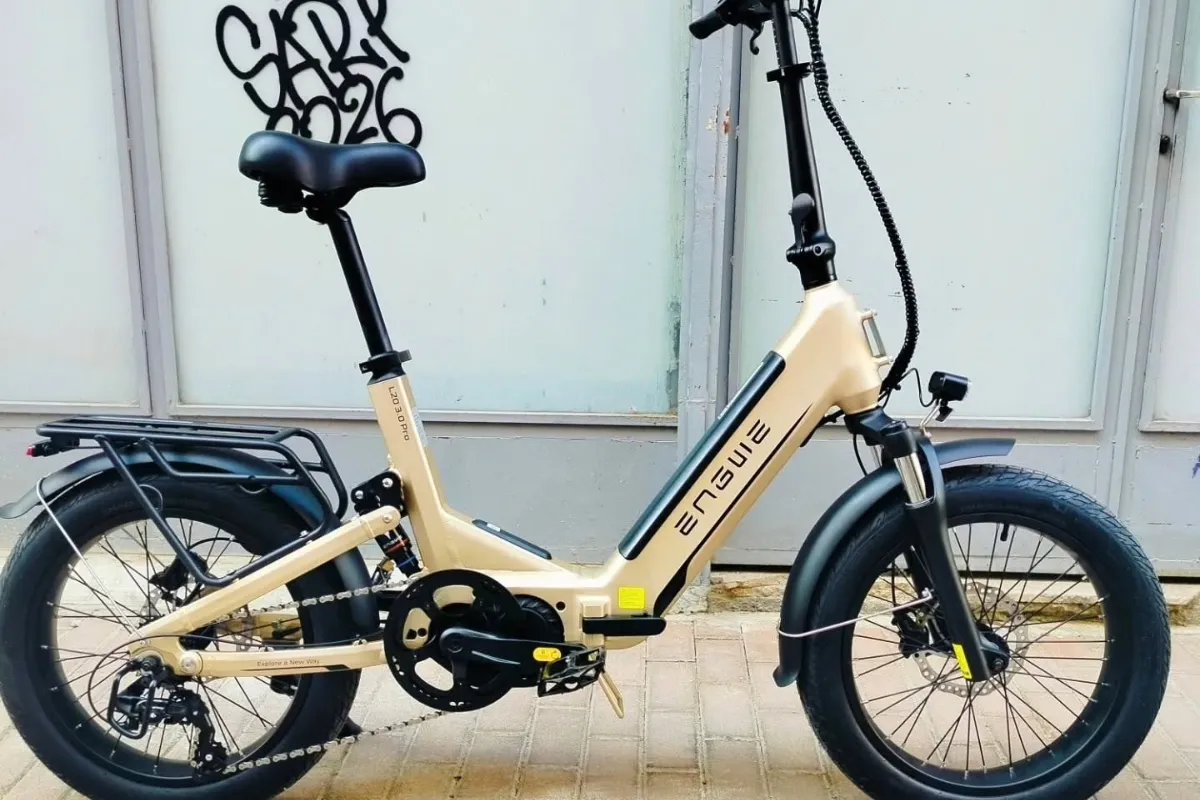
The ENGWE L20 3.0 is a full-suspension, step-through folding e-bike designed for riders who want more comfort and utility than a typical compact folder. Its key features include a 750W hub motor, a removable 720Wh battery, 8A fast charging, hydraulic brakes, a rear rack, and GPS-enabled app functions.
This is not a lightweight e-bike for carrying upstairs or taking on public transit. ENGWE lists it at 76.1 lb, so it makes more sense for ground-level storage, garages, RV bays, truck beds, and properly rated vehicle carriers.
Quick Answer: Who Is It For?
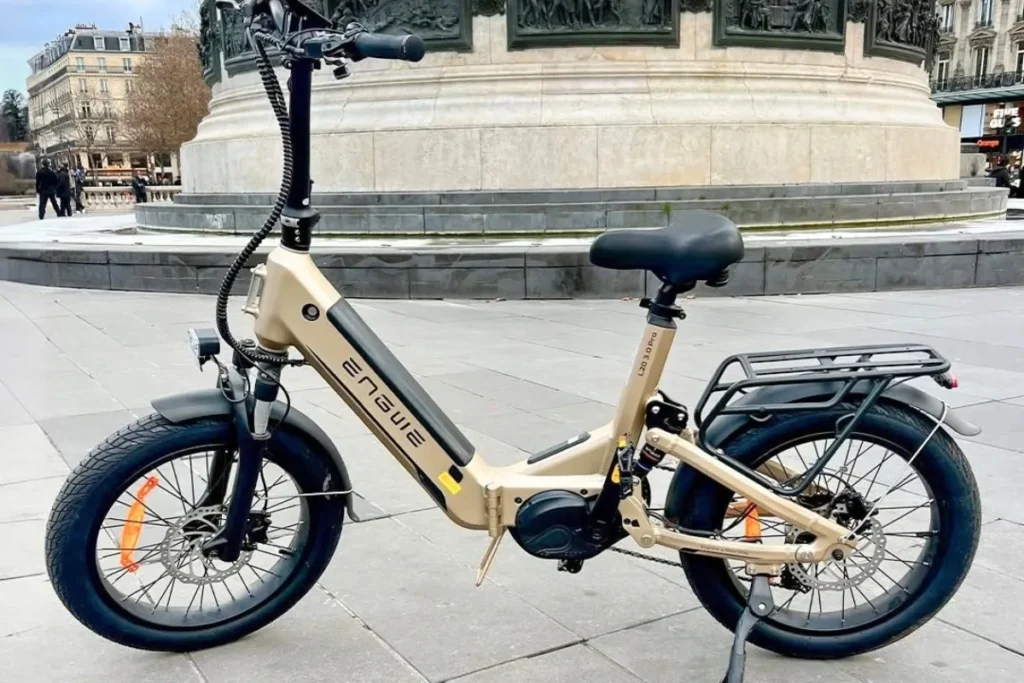
The ENGWE L20 3.0 is a good fit if you want a comfort-focused e-bike for commuting, errands, leisure rides, or RV travel, and you need a practical way to store and transport a heavy bike.
It is especially suited to riders who want a step-through frame, a rear rack, fast charging, a larger battery, and more cushioning on uneven streets or maintained gravel paths. ENGWE lists a maximum payload of 330 lb, although that figure is a manufacturer specification rather than an independent cargo test.
It is less suitable if you need to carry an e-bike upstairs, lift it into a vehicle frequently without help, rely on public transit, or ride technical mountain-bike trails. Available information is stronger on specifications and early ride coverage than on long-term ownership experience.
Why It Fits Commuting, Leisure Rides, and RV Travel
Commuting and Errands
The low-step frame, eight-speed drivetrain, hydraulic brakes, rear rack, and integrated lights give the L20 3.0 the equipment expected of an everyday utility e-bike. Its 20 × 3-inch tires and front-and-rear suspension are intended to make patched pavement, rough city streets, and casual local rides more manageable.
GPS tracking, movement alerts, and app monitoring can add peace of mind when the bike is parked at work or outside a store. They are useful security tools, but they do not replace a strong lock and secure parking.
Leisure and Mixed-Surface Riding
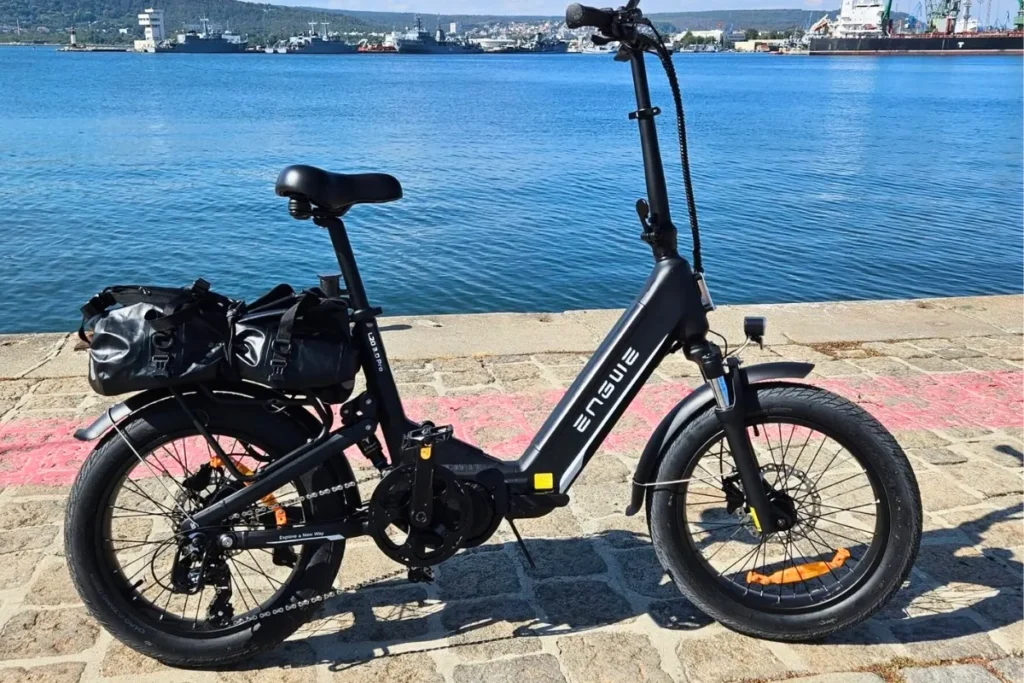
The L20 3.0 is better suited to neighborhood roads, paved paths, uneven asphalt, hard-packed dirt, and maintained gravel than a rigid folding e-bike with narrow tires. In one published range ride, the route included both pavement and hard-packed dirt, and the reviewer described the bike as comfortable on that mix.
It is not a technical e-mountain bike. The suspension and tire setup are intended for everyday comfort and light mixed surfaces, not rocky singletrack, aggressive downhill riding, or demanding off-road terrain.
RV and Vehicle Travel
The folding frame can reduce the bike’s storage footprint in an RV, truck bed, or suitably large vehicle cargo area. Because the battery is removable, you can also charge it separately when bringing the entire bike indoors is inconvenient.
Weight remains the central issue. At 76.1 lb with the battery installed, the bike may require a ramp, lift, or carrier rated for a heavy e-bike. Folding helps with storage; it does not make the bike easy to lift.
Motor, Speed, and Hill Use
ENGWE lists a 750W hub motor, up to 1,500W peak output, 90Nm of torque, and a top speed of up to 28 mph for the U.S. L20 3.0. These are product specifications, not a promise that every rider will see the same speed or climbing performance.
Published third-party riding evidence suggests that the bike has substantial assistance for a folding hub-drive model. In a PAS 3 range ride, one reviewer climbed a stated 12% grade and reported that the bike handled it without difficulty. That result reflects one rider, route, battery state, payload, and assist setting.
The L20 3.0 allows you to choose between torque-sensor and cadence-sensor assist. Torque mode is intended to respond to pedal pressure, while cadence mode can provide more immediate assistance after the pedals begin turning. Your preferred setting will depend on how much pedaling effort you want to contribute and the terrain you ride.
Local regulations still matter. E-bike speed, throttle use, motor-power definitions, and permitted riding locations can vary by state, city, trail system, and park authority.
Battery, Range, and Fast Charging
The ENGWE L20 3.0 uses a removable 48V 15Ah battery rated at 720Wh. ENGWE advertises up to 60 miles of range, but that is a maximum claim rather than an expected result for every ride.
One published PAS 3 range test recorded 45.16 miles. The rider weighed 178 lb and carried roughly 15–20 lb of gear; the route included stops, turns, varied terrain, about 70% pavement, 30% hard-packed dirt, and 548 ft of climbing. The reported average moving speed was 14.5 mph over 3 hours and 24 minutes.
That result suggests the L20 3.0 can handle many local commutes, errands, and recreational rides on a charge. Your own result may be shorter or longer depending on assist level, throttle use, speed, hills, rider and cargo weight, wind, temperature, tire pressure, and stop-start traffic.
ENGWE promotes an 8A charger and approximately two-hour charging. Treat that as an estimate rather than a fixed zero-to-full figure, since charging time depends on the battery’s remaining charge and conditions. The practical benefit is reduced downtime if you need to recharge between rides.
Folding, Storage, and Transport
The L20 3.0 folds to reduce the amount of space it occupies, not to become a lightweight carry-anywhere e-bike. At 76.1 lb with the battery installed, it is better suited to people who can roll, ramp, or securely mount it than to people who need to carry it often.
The folding frame is useful in a garage, RV storage area, truck bed, or a vehicle cargo space large enough for the folded bike. Exact vehicle fit depends on the available space, loading height, and storage layout.
Removing the battery can reduce the weight you need to handle. One independent reviewer measured the bike at 67.9 lb without the battery, though ENGWE does not publish an official battery-removed weight in the available product information.
The L20 3.0 makes sense if folding solves a real storage or transport problem. It is not a strong match for daily stair carrying, train use, small-car loading without a ramp, or repeated solo lifting.
Ride Comfort and Everyday Usability
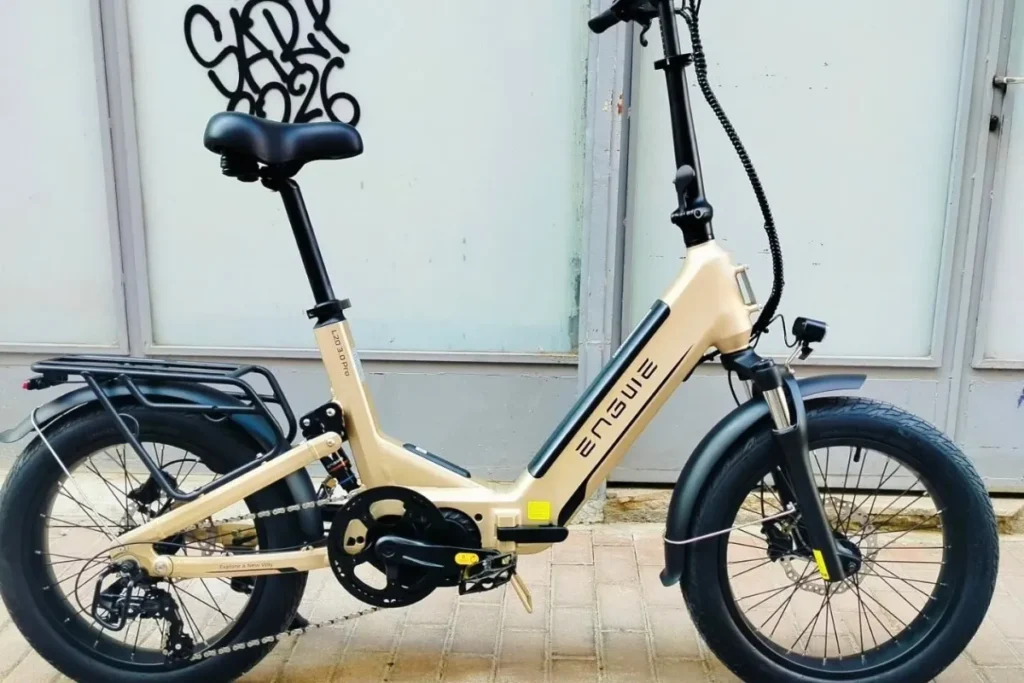
The step-through frame, 20 × 3-inch tires, swept-back handlebar, and full-suspension layout make the L20 3.0 a comfort-oriented e-bike. It also uses a Shimano eight-speed drivetrain, an ergonomic saddle, and Tektro hydraulic disc brakes with 203mm rotors.
The front fork has 80mm of travel, lockout, and preload adjustment. An independent reviewer described the rear shock as having roughly 30mm of travel. This is a setup intended to smooth ordinary road imperfections rather than provide the long-travel performance of a purpose-built trail bike.
Feedback on the rear suspension is mixed. One reviewer described the bike as comfortable across pavement and hard-packed dirt, while other review coverage found the rear shock firmer or less active than expected. The realistic expectation is more comfort than a rigid folding e-bike, not premium full-suspension mountain-bike performance.
The brakes are substantial for this type of e-bike. Independent coverage identified Tektro hydraulic brakes with dual-piston calipers and 203mm rotors at both ends. No standardized stopping-distance data is available, so it would be inaccurate to claim a specific braking advantage.
Smart Security and Ownership Practicalities
The L20 3.0 includes GPS tracking, movement alerts, app monitoring, and 4G/IoT connectivity. Published coverage also describes an alarm, real-time location functions, and in-app navigation.
These features can help you monitor the bike when it is parked away from home. They cannot physically prevent theft, so a high-quality lock, a secure locking point, and sensible storage remain essential.
The security system is most useful if you park outside regularly, commute to work, or travel with the bike. It is less important if the bike stays in a locked garage, though alerts and location functions can still be reassuring.
Current U.S. terms for cellular service and ongoing connected features are not clearly stated in the available official product information. Avoid assuming a fixed subscription cost or renewal policy.
Main Advantages and Limitations
| Advantages | Limitations |
|---|---|
| Full-suspension, step-through frame for comfort-oriented local riding | 76.1 lb weight limits hand portability |
| 720Wh removable battery with up to 60 miles of claimed range | The 45.16-mile PAS 3 result is useful context, not a universal range figure |
| 8A charging for shorter turnaround time | Rear-suspension feedback is mixed |
| Rear rack, lights, Shimano eight-speed drivetrain, and hydraulic brakes | Folding improves storage more than carrying |
| GPS, app monitoring, and movement-alert functions | GPS does not replace secure locking |
| Published hill and mixed-surface riding evidence | Long-term U.S.-specific durability evidence remains limited |
Is the ENGWE L20 3.0 Right for Your Daily Routine?
Choose It If You Want Comfort, Range, and Easier Storage
The ENGWE L20 3.0 is likely to suit you if you:
- Have secure, ground-level storage at home, work, or an RV site
- Want a low-step e-bike for commuting, errands, or relaxed rides
- Ride on paved streets, paths, rough asphalt, hard-packed dirt, or maintained gravel
- Value fast charging, a rear rack, a removable battery, and GPS-based tracking
- Need a folding frame for a garage, RV bay, truck bed, or larger vehicle
- Can safely load, unload, and transport a heavy e-bike
Skip It If You Need a Lightweight, Easy-to-Carry E-Bike
A different e-bike may suit you better if you:
- Need to carry your bike upstairs or onto public transit
- Want a lightweight folder for frequent solo lifting
- Plan to ride technical mountain-bike trails
- Expect premium mountain-bike suspension performance
- Want extensive long-term ownership evidence before buying
- Cannot safely store or transport a 76.1 lb bike
Alternatives to Consider
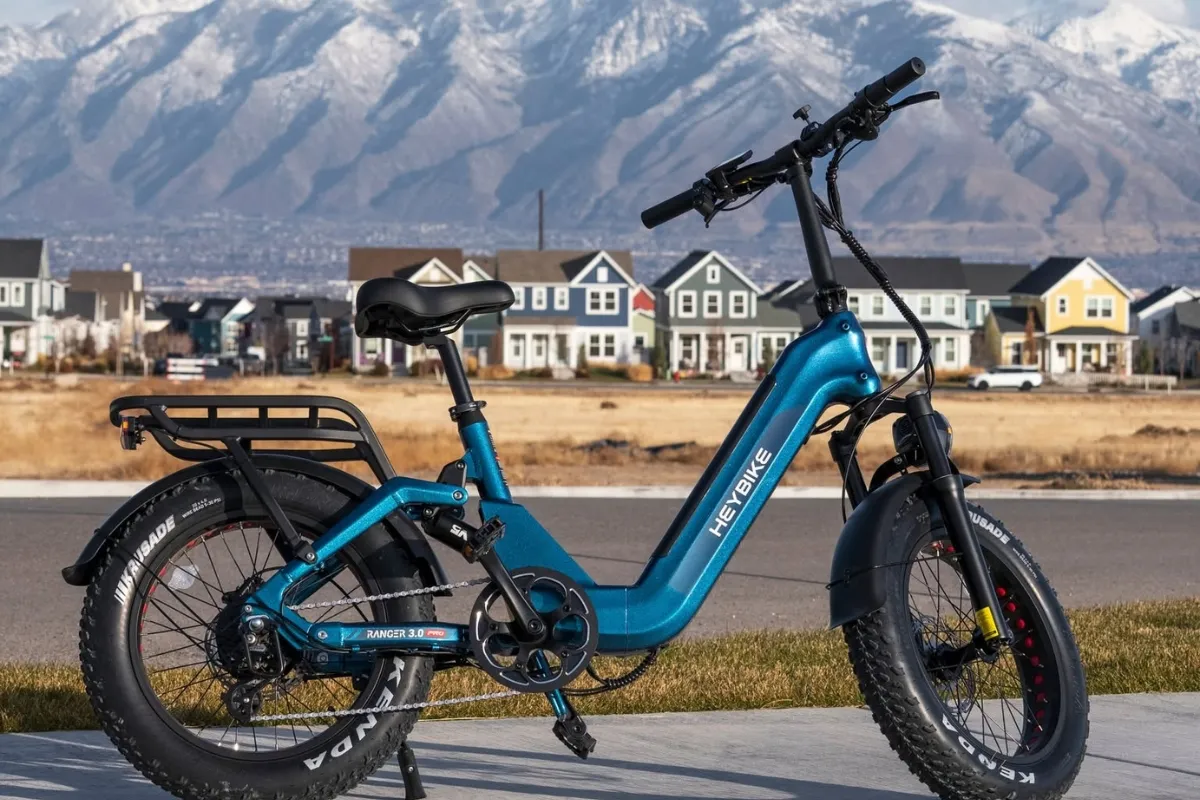
The ENGWE L20 3.0 is distinctive for combining full suspension, a 720Wh battery, 8A charging, and GPS-enabled features. ENGWE’s own comparison table identifies the Aventon Sinch 2.5 and Heybike Ranger 3.0 Pro as comparable folding e-bikes.
| Model | Suspension | Battery | Listed Weight | Listed Payload | Key Difference |
|---|---|---|---|---|---|
| ENGWE L20 3.0 | Full suspension | 720Wh | 76.1 lb | 330 lb | 8A charging and GPS/app functions |
| Aventon Sinch 2.5 | Front suspension | 672Wh | 75.6 lb | 300 lb | Front suspension rather than full suspension |
| Heybike Ranger 3.0 Pro | Full suspension | 720Wh | 75 lb | 440 lb | Higher listed payload |
These figures come from ENGWE’s comparison chart and should be treated as manufacturer-provided context. They do not establish real-world ride quality, range, durability, or long-term ownership outcomes.
Conclusion
The ENGWE L20 3.0 is a good choice for riders who want comfort, utility, fast charging, and a folding frame for storage or vehicle travel. Its main compromise is weight: it folds, but it remains a 76.1 lb utility e-bike rather than a lightweight portable folder.
Choose it if you can safely store and transport a heavy bike and want a step-through design for commuting, leisure rides, errands, or RV trips. Look elsewhere if you need frequent carrying, transit-friendly portability, technical-trail capability, or a purchase decision based on extensive long-term ownership evidence.